
Arthroscopy of the Knee
WHAT IS KNEE ARTHROSCOPY?
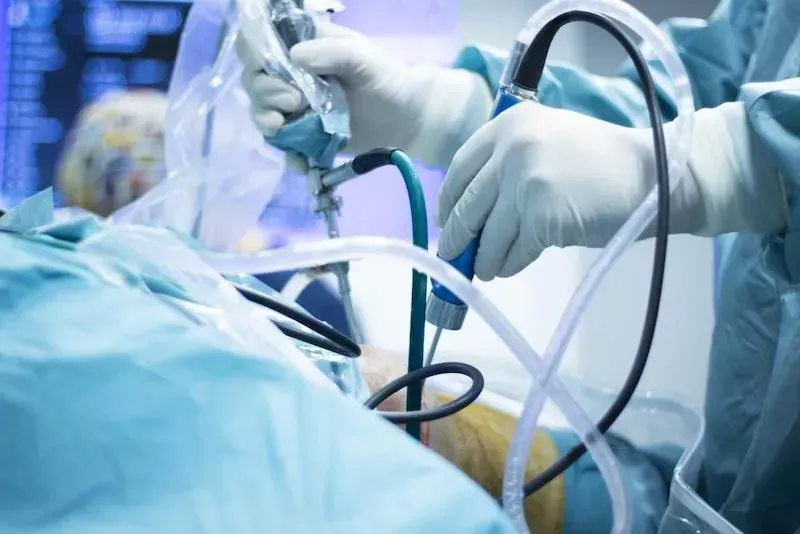
Knee arthroscopy is a minimally invasive procedure used to diagnose and treat many conditions inside the knee joint. Instead of creating large incisions, the surgeon uses two or three small cuts to insert a tiny camera and specialised instruments. This approach allows the surgeon to clearly see the inside of the knee and repair damaged structures with far less disruption to surrounding tissues.
What Can Knee Arthroscopy Help With?
Arthroscopic surgery can diagnose and treat knee injuries, including:
- Torn anterior or posterior cruciate ligaments
- Torn meniscus (the cartilage between the bones in the knee)
- Patella that’s out of position
- Pieces of torn cartilage that are loose in the joint
- Removal of a Baker’s cyst
- Fractures in the knee bones
- Swollen synovium (the lining in the joint)
WHO IS SUITABLE FOR KNEE ARTHROSCOPY?
Knee arthroscopy is suitable for individuals with knee problems that do not respond to non-surgical treatments. These include
- Meniscus tears: Tears in the rubbery cartilage that cushions the knee joint can cause pain, swelling, and difficulty moving the knee.
- ACL injuries: A torn anterior cruciate ligament (ACL) can cause knee instability, pain, and swelling.
- Synovitis: Inflammation of the lining of the knee joint can cause pain, stiffness, and swelling.
- Loose bodies: Small pieces of bone or cartilage that float in the knee joint can cause pain, locking, and catching.
Benefits of Knee Arthroscopy
Knee arthroscopy offers several advantages for suitable patients. These benefits stem from the technique's minimally invasive nature and the precision of modern instruments.
- Accurate diagnosis and treatment at the same time:
The surgeon can diagnose and correct many problems during the same procedure.
- Smaller incisions: Leading to reduced scarring and often a more comfortable recovery.
- Faster healing: The smaller wounds and gentle tissue handling allow many patients to return to daily activities sooner.
- Less pain after surgery: Compared with open surgery, patients generally experience less discomfort and swelling.
- Lower infection risk: The smaller incisions help minimise complication rates.
- Improved knee function: Removing damaged tissue, smoothing cartilage, or repairing tears can relieve symptoms and improve mobility.
- Shorter hospital stay: Many knee arthroscopies are performed as day procedures, allowing patients to return home the same day.
Results vary depending on the condition being treated and the patient’s commitment to rehabilitation.
Types of Knee Arthroscopy
Knee arthroscopy includes a range of techniques customised to the patient’s condition. Each one is designed to address a specific problem inside the joint.
- Meniscus repair or trimming: Used when the meniscus cartilage is torn. The surgeon may repair the tear with sutures or trim only the damaged portion to preserve as much healthy tissue as possible.
- Cartilage smoothing or microfracture: Helps treat worn or damaged cartilage by smoothing the surface or stimulating new cartilage growth.
- Removal of loose bodies: Small fragments of bone or cartilage are taken out to improve movement and reduce discomfort.
- Ligament procedures: Some ligament injuries can be assessed or treated using arthroscopy, such as partial ACL injuries or associated damage inside the joint.
- Synovectomy: When the joint lining becomes inflamed or thickened, a portion may be removed to reduce swelling and pain.
- Arthroscopy for patella problems: Used to treat issues involving the kneecap, such as cartilage wear or tight soft tissue structures.
- Treatment for persistent swelling: Used when fluid buildup or joint irritation needs to be addressed directly.
The surgeon selects the most appropriate combination of techniques based on imaging results, examination, and the patient’s symptoms.
Preparation Before Knee Arthroscopy
Before a knee arthroscopy, the surgeon will conduct a physical exam and review your medical history to ensure you are a good candidate for the surgery. You may need to stop taking certain medications or supplements in the days leading up to the procedure to reduce the risk of bleeding. You must also arrange for someone to drive you home after the surgery.
What Happens During a Knee Arthroscopy Procedure?
The knee arthroscopy procedure typically takes 30 to 60 minutes. Here are the steps involved:
- Anaesthesia: The surgeon will administer either general anaesthesia or regional anaesthesia (such as a spinal or epidural block) to numb the knee and prevent pain during the surgery.
- Incision: The surgeon will make small incisions (about ¼ inch) around the knee joint to insert the arthroscope and other surgical instruments.
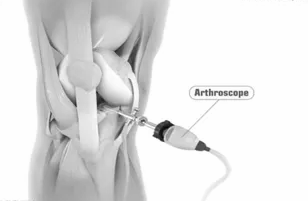
- Arthroscopy: The surgeon will insert the arthroscope, a small camera, through one of the incisions to view the inside of the knee joint. The arthroscopy images are displayed on a monitor, allowing the surgeon to visualise the joint and guide the surgical instruments.
- Repair or Removal: Depending on the condition of the knee joint, the surgeon may use surgical instruments to repair or remove damaged tissue, such as a torn meniscus or damaged cartilage.
- Closure: Once the procedure is complete, the surgeon will remove the arthroscope and other instruments and close the incisions with stitches or surgical tape.
What To Expect After a Knee Arthroscopy Procedure?
After the knee arthroscopy, you will be taken to a recovery area to rest and have your vital signs monitored. You will likely experience some pain, swelling, and stiffness in the knee joint, which can be managed with pain medications and ice.
You may also need crutches or a brace to protect the knee joint as it heals. Your doctor will provide instructions on caring for your knee and when you can return to normal activities.
Post-Op Instructions
What to Expect
Recovery speed after arthroscopy varies and depends on your condition and the type of surgery. Every case is different, and hence only general comments are made here.
The operation's findings will be discussed in detail at the first follow-up visit rather than immediately after the operation, as you may still be recovering after the anaesthetic.
Pain
You should be pain-free for the first 4-8 hours after the operation. Some discomfort can be expected in the first 24 hours. Ensure you have painkillers (or a prescription for such) to take home on discharge. If you experience pain, take painkillers as prescribed; place an ice pack or frozen peas on the knee (over a layer of a towel) for 10-15 minutes every half hour. Some swelling is also expected.
Walking/Exercises
You may put full pressure on the leg and walk as comfortably as you like, unless told otherwise. Crutches or a walking stick may be required for a few days.
Carry out straight-leg raise exercises: clench the quads, lift the leg (with the knee straight) 6 inches off the bed, hold it there for 3 seconds, and lower it back into bed. Repeat 20 times or more every waking hour.
Depending on your condition and the type of surgery, you may or may not need physiotherapy.
Driving
You must not drive or operate machinery for the first 24 hours due to the anaesthetic effect. If your left knee is involved and you drive an automatic car, you may drive when able. If your right knee is involved, you may return to driving if you can depress the brake and control the vehicle in an emergency.
Dressings
Remove the outer bandage 24 hours after the operation. Underneath the bandages will be stick-on dressings. Try to keep these dressings intact and dry. Remove these after five days, exposing the small stitches or covering them with an ordinary Band-Aid.
You may let the knee get wet after five days. If water does get under the dressing, remove it and replace it with an ordinary Band-Aid.
Warning Signs
- Severe pain after the first 24 hours, not relieved by painkillers.
- Redness of the wound and feeling feverish.
- Pain in the calf, chest pain or shortness of breath.
If you have any of the above symptoms, contact your doctor or the hospital immediately.
Knee Arthroscopy Prognosis
In general, knee arthroscopy has a high success rate and can effectively relieve pain and improve knee function.
Recovery time varies depending on the extent of the surgery and the individual's healing rate. In most cases, patients can resume normal activities within a few weeks to a few months after the surgery.
Knee Arthroscopy Risks
Like any surgical procedure, knee arthroscopy carries some risks. These include
- Infection at the incision site or in the knee joint.
- Excessive bleeding can occur during the surgery or the days following the procedure.
- Blood clots can form in the leg veins, which can be life-threatening if they travel to the lungs.
- Nerves around the knee joint can be damaged during surgery, leading to numbness or weakness in the leg.
- There is a risk of anaesthesia-related complications, including allergic reactions and breathing problems.
- In patients with early arthritic changes, there is some evidence that arthroscopic "cleaning-up" surgery can worsen the arthritis.
What If Knee Arthroscopy is Delayed?
Delaying knee arthroscopy can cause the underlying condition to worsen, potentially leading to more extensive surgery or even joint replacement in severe cases. If you are experiencing knee pain, swelling, or stiffness, it is essential to consult with an orthopaedic surgeon as soon as possible to determine the best course of treatment.
In some cases, non-surgical treatments such as physical therapy, medications, or injection therapy may be sufficient to alleviate symptoms and delay or avoid surgery.