
Rotator Cuff Damage

What is Rotator Cuff Damage?
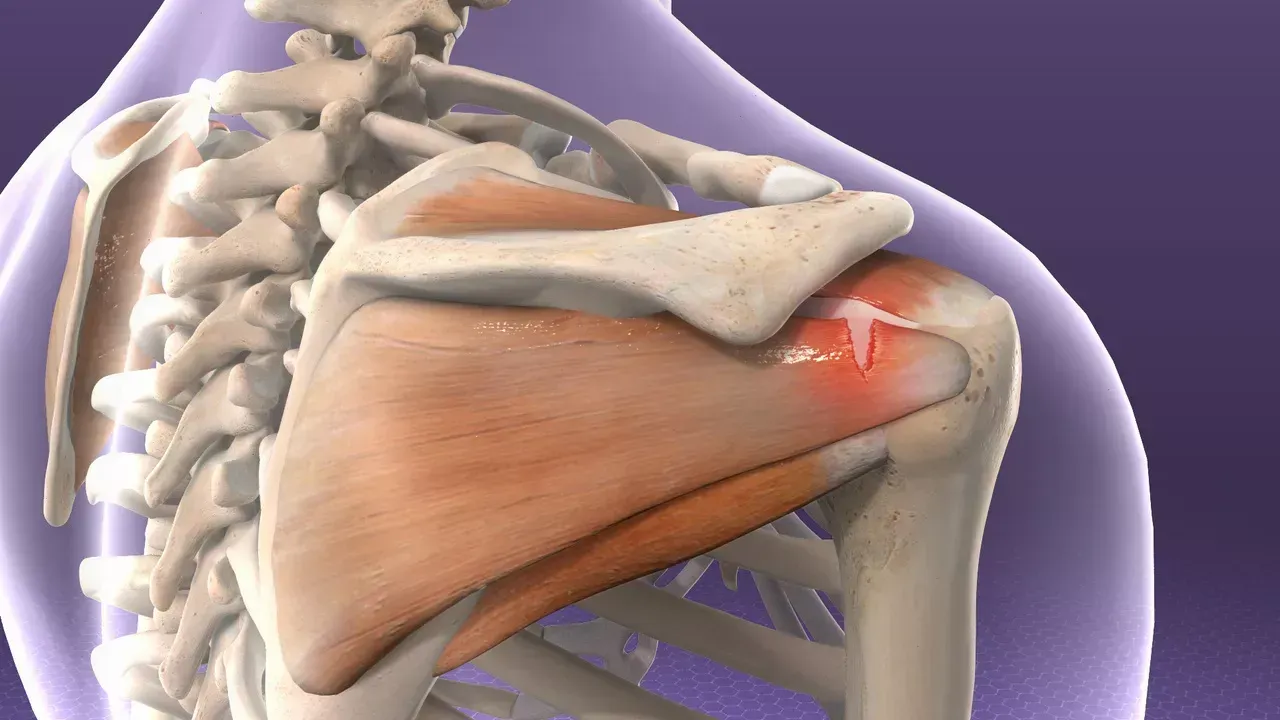
Rotator cuff damage refers to irritation, inflammation, or tearing of the group of four muscles and their tendons that help stabilise and move the shoulder. These muscles connect the shoulder blade to the upper arm bone and allow you to lift, rotate, and reach with your arm. Damage can range from mild tendon irritation to partial or full-thickness tears. It may develop suddenly after an injury or gradually over time due to wear and tear. Rotator cuff damage is among the most common causes of shoulder pain in adults, particularly with age.

How Does Rotator Cuff Damage Impact Your Anatomy and Health?
When the rotator cuff is injured, the tendon fibres become weakened or disrupted. This reduces their ability to maintain shoulder stability and function smoothly. As a result, even simple shoulder movements can become painful or difficult. Swelling around the joint can narrow the space where the tendons are located, causing further irritation during arm lifting. Over time, this can lead to stiffness, decreased strength, and changes in posture as the body compensates for pain. In more severe cases, untreated tears can progress, leading to chronic pain, limited movement, and early shoulder arthritis.
Risk Factors for Rotator Cuff Damage
- Adults over 40: Natural tendon ageing makes the cuff more prone to degeneration and tearing.
- People with repetitive overhead activity: Painters, carpenters, manual labourers, and athletes such as swimmers, tennis players, and baseballers are at increased risk.
- Individuals with poor shoulder posture or muscle imbalance: Weak shoulder blade muscles place more strain on the rotator cuff.
- People with previous shoulder injuries: A history of dislocation, fracture, or strain increases future vulnerability.
- Smokers: Reduced blood supply to tendons affects healing quality and increases wear over time.
- People with metabolic conditions: Diabetes and high cholesterol are linked with poorer tendon health.
Causes of Rotator Cuff Damage
- Repetitive overhead movements: Reaching, lifting, or working with the arms above shoulder height can cause gradual tendon wear.
- Degenerative changes with ageing: Tendons naturally weaken over time, making them easier to tear even during normal activities.
- Acute injury: A sudden fall, lifting something heavy, or a jerking motion can cause a tear.
- Bone spurs: Small bony growths under the acromion can rub on the tendon and lead to irritation or tearing.
- Poor shoulder mechanics: Weak supporting muscles, tightness in the chest or neck, or incorrect posture increase strain on the cuff.
- Reduced blood supply: Tendons receive less circulation as people age, reducing their ability to repair small injuries.
Symptoms of Rotator Cuff Damage
- Shoulder pain: Often felt on the outside of the shoulder or upper arm, especially when lifting or reaching.
- Pain at night: Many people find it painful to lie on the affected side, and discomfort can disturb sleep.
- Weakness: Lifting the arm or rotating the shoulder may become difficult, especially above shoulder height.
- Reduced range of motion: The shoulder may feel stiff or restricted, and overhead actions can be limited.
- Clicking or catching: Some notice a grinding sensation due to irregular tendon movement.
- Sudden sharp pain: With an acute tear, pain can be immediate, intense, and may follow a specific injury event.
Preventing Rotator Cuff Damage
- Strengthen shoulder and scapular muscles: Regular exercises that strengthen the rotator cuff and scapulae help protect the joint and distribute load more evenly.
- Stretch regularly: Keeping the chest, upper back, and neck flexible reduces stress on shoulder tendons.
- Improve posture: Avoiding rounded shoulders and adopting a neutral spine reduces compression on the cuff.
- Use proper lifting technique: Keep objects close to your body and avoid lifting heavy items above shoulder height.
- Limit repetitive overhead work: Take breaks, switch arms where possible, and use supportive equipment when needed.
- Warm up before sports: Gentle mobility exercises before activities such as tennis, swimming, or throwing help prepare the tendons.
- Address early symptoms: Seeking assessment when mild discomfort begins can prevent a small problem from becoming a large one.
- Manage general health: Stopping smoking, maintaining healthy cholesterol levels, and keeping diabetes well controlled support tendon nutrition and durability.
Types of Rotator Cuff Damage
Rotator cuff damage appears in several forms, ranging from mild irritation to full-thickness tears. These types help guide treatment decisions and often indicate how the injury occurred. Tendon problems can start subtly and progress when not addressed early. Understanding the different forms allows patients to recognise their symptoms and seek treatment at the right time.
- Tendinitis: Early inflammation of the rotator cuff tendons, typically caused by overuse or repetitive overhead activity. The tendons become irritated and swollen, leading to pain during movement. Tendinitis commonly affects active adults or those who suddenly increase activity levels.
- Tendinosis: Over time, repetitive stress can cause the tendon fibres to weaken and fray. This degenerative change is known as tendinosis. Instead of inflammation, the tendon exhibits structural deterioration, which increases its susceptibility to tearing. Symptoms are often long-lasting and may fluctuate.
- Partial-thickness tear: This occurs when only part of the tendon is damaged. The surface or a portion of the tendon is worn or torn, while some fibres remain attached. Pain may be significant, and strength is often reduced.
- Full-thickness tear: Also called a complete tear, this occurs when the tendon is completely detached from the bone. These tears may result from a sudden injury or develop gradually through degeneration. Patients usually notice weakness, difficulty lifting the arm, and persistent pain.
- Acute tear: Resulting from trauma such as a fall, lifting something heavy, or a sudden jerking motion. Acute tears often cause immediate pain and restricted movement.
- Chronic degenerative tear: These tears progress slowly over time due to wear and tear. They are more common in older adults and often start with symptoms of tendinosis before the tendon eventually splits.
Stages of Rotator Cuff Damage
Rotator cuff problems often follow a predictable pattern as the tendon becomes irritated, weakened, and eventually damaged. The stages help clinicians identify the severity and the most appropriate treatment.
- Stage 1 – Inflammation and irritation: The tendon becomes inflamed due to overuse, poor posture, or repetitive movements. Symptoms include mild pain, especially with overhead activity, and occasional night discomfort. Strength is usually normal at this stage.
- Stage 2 – Thickening and degeneration: Ongoing stress leads to chronic irritation. The tendon becomes thicker and less flexible, and microtears may develop. Pain becomes more frequent, and arm lifting may feel more difficult.
- Stage 3 – Partial tears: As degeneration progresses, the tendon begins to split. Pain is more constant, strength decreases, and daily activities become harder. Movements such as reaching behind the back or lifting objects may trigger sharp pain.
- Stage 4 – Full-thickness tears: The tendon separates completely from the bone. At this stage, weakness is significant, and some overhead or rotational movements may be nearly impossible. Without treatment, tears often enlarge over time.
Diagnosis of Rotator Cuff Damage
Diagnosis begins with a detailed history and physical examination by a doctor or shoulder specialist. The goal is to determine the onset of symptoms, which movements are affected, and whether there has been a specific injury. A thorough clinical assessment provides most of the information needed before imaging is considered.
- Physical examination: The clinician assesses shoulder range of motion, strength, posture, muscle balance, and tenderness. Specific tests help identify which tendon is affected and whether a tear is likely.
- X-ray: Although X-rays cannot show tendons, they help rule out bone problems such as arthritis, bone spurs, or a narrowed space where the tendon sits.
- Ultrasound: A dynamic imaging test that shows the tendon in real time during movement. It can detect inflammation, partial tears, and full-thickness tears.
- MRI: The most detailed scan for rotator cuff damage. It provides clear images of tendon thickness, tear size, and involvement of nearby structures. MRI is particularly useful for surgical planning.
- Diagnostic injections: A local anaesthetic injection may be used. If pain improves immediately, this confirms the shoulder as the primary source of symptoms.
Treatment for Rotator Cuff Damage
Treatment depends on the type of injury, its severity, the duration of symptoms, and the patient’s overall activity level. Many early-stage injuries improve with conservative care, while larger tears may require surgical repair. A structured plan often leads to better outcomes.
- Rest and activity modification: Reducing overhead tasks, heavy lifting, or repetitive movements helps calm inflammation. Avoiding painful activities prevents further tendon stress.
- Physiotherapy: This is a key part of treatment. Therapy includes strengthening the rotator cuff and scapular muscles, stretching tight structures, improving posture, and retraining shoulder mechanics. Many patients recover without surgery when therapy is done consistently.
- Anti-inflammatory medication: Short-term use of ibuprofen or other anti-inflammatory drugs may reduce pain. These should be used only as advised by a clinician.
- Corticosteroid injections: These injections can reduce inflammation and pain, especially in cases of bursitis or tendinitis. They are usually limited to a small number due to the potential weakening of the tendon over time.
- Platelet-rich plasma (PRP): Some clinicians use PRP to promote tissue healing in partial tears or chronic tendinosis. Evidence varies, and suitability depends on individual circumstances.
- Surgery for rotator cuff tears:
- Small or partial tears may be repaired arthroscopically, restoring the tendon to the bone.
- Larger tears may need more extensive repair or grafting.
- In cases of severe degeneration where repair is not possible, alternative procedures such as tendon transfer or reverse shoulder replacement may be recommended.
- Surgery is often considered when pain persists despite months of therapy or when weakness significantly affects daily life.
- Rehabilitation after surgery: Recovery involves a structured program that includes immobilisation, graded mobilisation, strengthening, and a return to activity. Full recovery may take several months.
What if Rotator Cuff Damage is Untreated?
Leaving rotator cuff damage untreated can lead to ongoing pain, worsening weakness, and increasing tear size. Early intervention helps protect shoulder function and prevents long-term complications.
- Progressive tear enlargement: Partial tears often increase in size over time, particularly with ongoing heavy or repetitive use. Larger tears are more difficult to repair.
- Chronic pain: Persistent aching, night pain, and difficulty sleeping are common if the tendon continues to deteriorate.
- Loss of shoulder strength: Weakness may progress until daily activities such as lifting a kettle, hanging washing, or reaching overhead become difficult.
- Reduced mobility: Stiffness can develop, leading to frozen shoulder or altered shoulder mechanics.
- Arthritis development: Untreated long-term rotator cuff tears can lead to cuff tear arthropathy, a type of shoulder arthritis caused by tendon imbalance.
- Reduced quality of life: Patients may avoid exercise, work, hobbies, or sports due to pain and functional limitations.