
Shoulder Instability
What is Shoulder Instability?
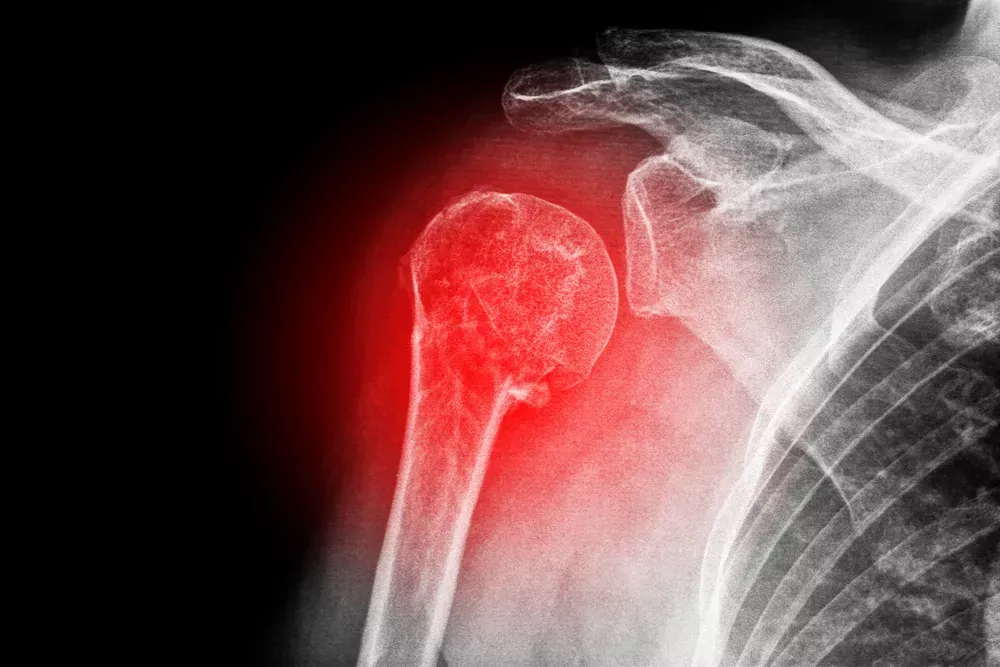
Shoulder instability is a condition where the top of the arm bone no longer stays firmly in the shoulder socket. The shoulder joint is designed to move freely in multiple directions, which also makes it more susceptible to slipping, loosening, or dislocation. Instability occurs when the structures that normally hold the joint steady – such as ligaments, tendons, cartilage, and muscles – become stretched, weakened, or damaged.
In a stable shoulder, the ball-and-socket shape allows a wide range of controlled movement. When instability develops, the ball may partially slip out of the socket (subluxation) or completely dislocate. These episodes can be painful and may recur over time if the joint does not heal properly or the underlying weakness is not addressed.

How Does Shoulder Instability Impact Your Anatomy and Health?
Shoulder instability can significantly affect your anatomy and health. When the shoulder joint becomes unstable, it can lead to dislocation, which can damage the surrounding ligaments, tendons, and muscles. This can result in pain, weakness, and reduced range of motion, making it challenging to perform simple tasks such as lifting objects, reaching overhead, or sleeping comfortably.
Risk Factors for Shoulder Instability
Individuals who engage in sports or activities that involve repetitive overhead motions are at a higher risk of developing shoulder instability. This includes athletes such as tennis players, swimmers, and baseball players, as well as manual labourers who perform overhead work, such as painters and construction workers. People with a family history of shoulder instability are also at a higher risk of developing this condition.
Causes of Shoulder Instability
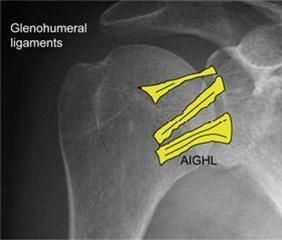
Shoulder instability can occur due to several factors, including:
- Trauma: A direct blow to the shoulder, such as a fall or collision, can dislocate the joint, leading to instability.
- Repetitive Strain Injuries: Overuse or repetitive strain can damage the muscles, ligaments, and tendons that support the shoulder joint, leading to instability over time.
- Genetics: Some individuals may have anatomical differences that make their shoulder joints more susceptible to instability.
- Aging:
As we age, the structures that support the shoulder joint can weaken, increasing the risk of instability.
What is a Bankart Tear?
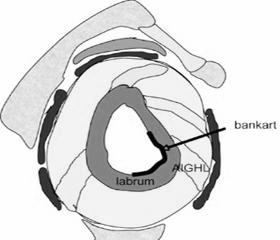
Bankart tear is a specific injury to a part of the shoulder joint called the labrum. The labrum is a ring of fibrous cartilage that surrounds the glenoid and stabilises the shoulder joint.
A Bankart tear can lead to recurrent dislocations, feelings of looseness, weakness, pain or clicking, and arthritis of the shoulder. Shoulder instability may be caused by injury, a fall on an outstretched hand, or repetitive overhead activities such as basketball, volleyball, or weightlifting.
Patients with shoulder instability may have severe pain, swelling, popping or grinding sound, partial or complete dislocation, loss of sensation or partial paralysis and loss of function.
Symptoms of Shoulder Instability
Shoulder Instability generally causes acute pain. Sufferers have the following symptoms:
- Pain or discomfort in the shoulder joint
- A feeling of instability or looseness in the shoulder joint
- A popping or clicking sensation when moving the shoulder
- Reduced range of motion in the shoulder joint
- Weakness or loss of strength in the shoulder muscles
- Numbness or tingling in the arm or hand
Preventing Shoulder Instability
Prevention focuses on strengthening the joint and avoiding excessive strain:
- Build shoulder strength: Strong rotator cuff and shoulder blade muscles improve stability.
- Warm up properly: Gentle stretches and activation exercises prepare the shoulder for movement.
- Avoid repeated overhead strain: Especially if you are prone to looseness or pain.
- Use correct technique: Athletes should follow proper form when throwing, lifting, or performing overhead motions.
- Manage early symptoms: Seeking assessment when discomfort begins helps prevent worsening instability.
- Rehab after injury: Completing full rehabilitation after a dislocation is essential to reduce the chance of repeated episodes.
Types of Shoulder Instability
Shoulder instability can be classified into two types: traumatic and atraumatic.
Traumatic instability occurs due to a sudden injury, such as a fall or collision, while atraumatic instability occurs due to repetitive strain injuries or genetic predisposition.
Traumatic instability is further classified into two types: anterior and posterior.
- Anterior instability occurs when the shoulder dislocates forward
- Posterior instability occurs when the shoulder dislocates backward
Atraumatic instability is classified into three types: multidirectional, inferior, and superior.
- Multidirectional instability occurs when the shoulder is unstable in multiple directions
- Inferior instability occurs when the shoulder dislocates downward
- Superior instability occurs when the shoulder dislocates upward
Stages of Shoulder Instability
Shoulder instability can be classified into three stages: subluxation, partial dislocation, and complete dislocation.
- Subluxation is the mildest stage of shoulder instability, where the humeral head (the ball-shaped end of the upper arm bone) moves out of its normal position but returns to the socket. It is often described as a partial dislocation, and the joint may feel unstable or loose.
- Partial dislocation, or partial subluxation, occurs when the humeral head partially dislocates from the glenoid (shoulder socket). In this stage, the humeral head moves partially out of the socket and returns to its normal position with minimal intervention.
- Complete dislocation is the most severe stage of shoulder instability, where the humeral head completely dislocates from the glenoid. This means the humeral head completely dislocates from the socket and does not return to its normal position without medical intervention.
The stages of shoulder instability may progress from subluxation to partial dislocation and, if left untreated or if the underlying condition causing the instability is not addressed, to complete dislocation.
Diagnosis of Shoulder Instability
Shoulder instability is diagnosed through physical examination, medical history review, and imaging tests.
Consultation
During this consultation, your doctor will:
- Take a medical history: with emphasis on the mechanism of injury, age of first dislocation, need for hospital reductions and disability
- Perform a physical examination: looking at a range of motion, strength, nerve injury and apprehension with arm positions
Imaging Tests
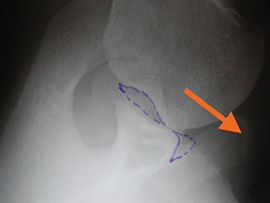
Imaging tests, such as X-rays, magnetic resonance imaging (MRI), or computed tomography (CT) scans, may also be used to confirm the diagnosis and assess the extent of shoulder joint damage.
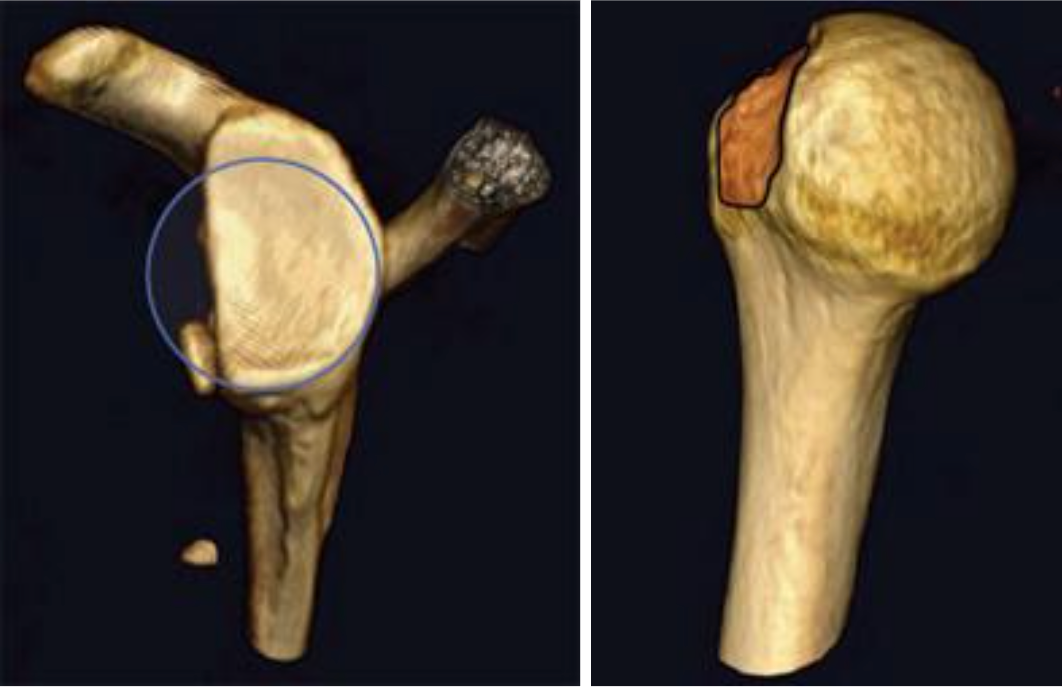
- X-rays: These pictures will show injuries to the bones that make up the shoulder joint. This may include a fracture of the socket (bony Bankart) or a crush fracture to the back of the humeral head (Hill-Sachs lesion).
- CT scan with 3D reconstruction:
Used to accurately assess bone loss as a result of instability.
MRI
An MRI can create detailed images of both hard and soft tissues.
The MRI scan can confirm
- the site of the ligament tear,
- cartilage damage,
- the integrity of the rotator cuff tendons,
- fractures.
Arthroscopy
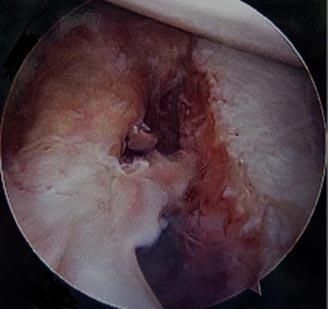
In complex instability, despite the above investigations, the direction and extent of pathology may require an examination under anaesthesia and keyhole camera assessment of the joint.
Treatment for Shoulder Instability
Shoulder instability may be treated with nonsurgical or surgical options.
Non-Surgical Treatments
- Immobilisation: slings can be worn for comfort. Prolonged immobilisation increases weakness and does not prevent a recurrence.
- Physical Therapy: can help restore range of motion and strength. This may be the principal therapy for “double-jointed” patients with lax ligaments and no tears.
- Activity modification: patients who dislocate out the front have to avoid, in the long term, having their arm in the throwing position under load.
Shoulder Instability Surgery
Surgery is an option for treating shoulder instability in cases where nonsurgical treatments, such as physical therapy, rest, or medications, have not succeeded or in severe instability.
The type of surgery recommended will depend on the underlying cause of the instability and the extent of the damage to the shoulder joint. Some surgical options for shoulder instability include:
- Arthroscopic Surgery: This minimally invasive surgery involves making small incisions around the shoulder joint and inserting a tiny camera and surgical instruments to repair the damaged structures. Arthroscopic surgery is commonly used to repair torn ligaments or cartilage and stabilise the shoulder joint.
- Open Surgery: Open surgery may be necessary in more severe cases of shoulder instability. This involves making a larger incision in the shoulder and repairing the damaged structures through the open incision. Open surgery may be necessary if there is significant damage to the bone or if the injury is too severe for arthroscopic surgery.
- Shoulder Replacement Surgery: This procedure involves removing the damaged parts of the shoulder joint and replacing them with artificial components. Shoulder replacement surgery is typically reserved for cases with severe damage to the shoulder joint, such as advanced osteoarthritis, or if other surgical options are unsuitable.
After surgery, rehabilitation is necessary to restore strength, range of motion, and stability to the shoulder joint. This may involve physical therapy, and following the rehabilitation plan prescribed by your orthopaedic surgeon is important.
What if Shoulder Instability is Untreated?
Leaving shoulder instability untreated can lead to several complications, including chronic pain, reduced range of motion, and recurrent dislocations. Over time, untreated shoulder instability can cause damage to the surrounding tissues and cartilage, leading to the development of arthritis.
Untreated shoulder instability can also impact your ability to perform everyday activities and affect your quality of life. It is important to seek medical attention if you experience symptoms of shoulder instability to prevent further joint damage and improve function.