
Chronic Elbow Pain
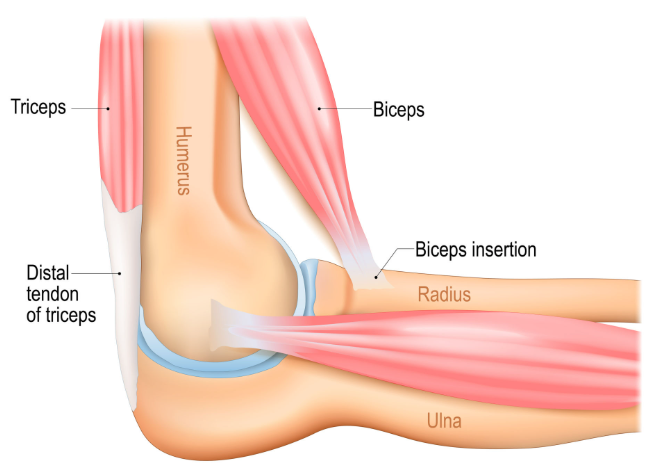
elbow anatomy
The elbow is a synovial joint in the upper limb that connects the upper arm bone (humerus) to the two bones of the forearm (radius and ulna). It is a hinge joint that allows the arm to bend (flexion), straighten (extension), and perform some rotational movements.
The bones of the elbow are supported by and surrounded by
- Ligaments and tendons
- Muscles
- Nerves
- Blood vessels
Injuries or conditions affecting the elbow joint, such as fractures, dislocations, arthritis, or overuse injuries, can impact its function and may require medical attention for diagnosis and treatment.

What is Chronic Elbow Pain?
Chronic elbow pain is discomfort around the elbow joint that persists for more than 3 months. It may develop gradually or follow an acute injury that never fully healed. The elbow is a complex hinge joint formed by three bones—the humerus, radius, and ulna—supported by ligaments, tendons, and muscles that allow bending, straightening, and rotation of the forearm. When one or more of these structures become irritated, weakened, or damaged, ongoing pain can occur.

How Does Chronic Elbow Pain Impact Your Anatomy and Health?
The elbow joint, where the upper arm bone (humerus) meets the forearm bones (radius and ulna), is critical for arm movement. Chronic elbow pain can limit the joint's mobility, making lifting, gripping, or even waving “hello”, painful or difficult.
This limitation can lead to muscle weakness from underuse and may impact your overall health. Difficulty with movement can disrupt sleep, reduce physical activity levels, and impact mental well-being due to persistent pain and reduced function.
Risk Factors for Chronic Elbow Pain
While chronic elbow pain can affect anyone, the risk is higher in:
- Athletes: Particularly those who participate in sports that involve repetitive arm motions like tennis, golf, or cricket.
- People with certain occupations: Manual labourers, gardeners, cooks, painters, and individuals who use computers extensively are at increased risk due to repetitive elbow movements or strain.
- Older adults: Age-related wear and tear can lead to conditions such as elbow arthritis.
Causes of Chronic Elbow Pain
Several conditions or factors can cause chronic elbow pain:
- Overuse or repetitive motion: Repeatedly performing the same elbow movements can cause strains or tiny tears in your elbow's muscles or tendons. Occupations such as plumbing, painting, carpentry, butchery, or hobbies like playing a musical instrument or sports like tennis and golf often require such repetitive motions.
- Injury: Trauma to the elbow, such as fractures, sprains, or dislocations, can lead to chronic pain if not properly treated or if the elbow is used before it's completely healed.
- Tendinosis: This is an inflammation or irritation of a tendon associated with small tears, commonly affecting the outer part of the elbow (tennis elbow) or the inner part (golfer's elbow).
- Bursitis: Inflammation of the bursa, a fluid-filled sac that allows smooth motion between bones, tendons, and muscles, can cause chronic pain. Elbow bursitis usually occurs at the point of the elbow.
- Arthritis: Osteoarthritis (wear-and-tear arthritis) can affect any joint, including the elbow. Another form of arthritis, rheumatoid arthritis, is an autoimmune disease that can cause severe damage to the elbow joint over time.
- Nerve entrapment: Conditions such as cubital tunnel syndrome or radial tunnel syndrome occur when major nerves in the arm are compressed or entrapped, leading to chronic elbow pain.
- Infection: Although rare, elbow joint infections can cause chronic elbow pain.
Symptoms of Chronic Elbow Pain
Chronic elbow pain, as the name suggests, is characterised by long-lasting or recurring pain in the elbow. But it can manifest in more ways than just pain. Depending on the cause, additional symptoms can include:
- Persistent pain: This could be a constant ache, a sharp pain when you use your elbow, or throbbing pain at night.
- Swelling or inflammation: Overuse or injury can lead to swelling around the elbow joint.
- Stiffness: You may find it difficult to fully extend or bend your arm, especially after rest or upon waking.
- Decreased range of motion: Moving your elbow, as usual, could be harder. You might struggle to lift objects, open jars, or shake hands.
- Weakness: Chronic elbow conditions can make it hard to grip items, open doors, or lift objects as you normally would.
- Numbness or tingling: Some conditions, like nerve entrapment, can cause a sensation of "pins and needles," numbness, or even decreased sensation in the hand or fingers.
- Redness or warmth: These are more common in infectious or inflammatory conditions.
Preventing Chronic Elbow Pain
Preventing chronic elbow pain requires a combination of good biomechanics, healthy tendon care, proper ergonomics, and early management of minor injuries. Helpful prevention strategies include:
- Strengthening and stretching exercises: Gentle strengthening of the wrist, forearm, and shoulder stabilisers can protect the elbow from overload. Stretching helps maintain flexibility and reduces tendon tension.
- Ergonomic workplace setup: Keeping your keyboard at elbow height, using an adjustable chair, and maintaining neutral wrist positioning can dramatically reduce strain.
- Taking regular breaks: Short breaks during repetitive tasks help prevent fatigue and overuse.
- Using proper technique for sports and lifting: Correct grip size in racquets, proper throwing mechanics, and suitable lifting techniques reduce unnecessary stress on the elbow.
- Gradual load increases: Avoid sudden increases in training intensity or work demands. Tendons adapt slowly, so progressive loading protects against injury.
- Wearing supportive bracing when needed: Counterforce braces or wrist supports may reduce strain during high-use activities, especially for people prone to tennis elbow.
- Maintaining general joint health: Staying active, managing weight, and addressing underlying conditions such as arthritis can reduce long-term elbow stress.
- Seeking early assessment: Addressing mild pain promptly can prevent it from progressing into a chronic condition.
Types of Chronic Elbow Pain
Chronic elbow pain can be caused by various conditions, each with its own characteristics and treatment needs. Here are some of the most common types:
- Tennis Elbow (Lateral Epicondylitis): This condition is characterised by pain in the outer part of the elbow, often caused by overuse of the forearm muscles and tendons.
- Golfer's Elbow (Medial Epicondylitis): Similar to tennis elbow, but the pain is on the inside of the elbow. It's often caused by overuse of the muscles in the forearm that allow you to grip, rotate your arm, and flex your wrist.
- Elbow Osteoarthritis: This type of arthritis occurs when the cartilage that cushions your elbow joint wears down over time, often causing pain and stiffness in the elbow.
- Rheumatoid Arthritis: This autoimmune disease can cause joint pain and damage throughout your body, including the elbow.
- Elbow Bursitis: In this condition, the bursa - a small fluid-filled sac that helps reduce friction in the elbow joint - becomes inflamed, causing pain and limited movement.
- Cubital Tunnel Syndrome: Also known as ulnar nerve entrapment, it occurs when increased pressure on the ulnar nerve, which runs close to the skin's surface in the elbow area, causes compression. It can cause numbness or tingling in the ring and small fingers, pain in the forearm, and/or weakness in the hand.
- Radial Tunnel Syndrome: This condition is caused by increased pressure on the radial nerve, often due to overuse, leading to pain that worsens when the wrist is extended.
- Elbow Sprain or Strain: Overstretching or tearing of ligaments (sprain) or muscles/tendons (strain) in the elbow can lead to chronic pain if not properly treated.
- Fracture or Dislocation: A broken or dislocated elbow can cause long-term pain if not properly treated or if complications such as nerve damage, arthritis, or stiff joints develop.
Stages of Chronic Elbow Pain
Chronic elbow pain can be broken down into three general stages:
- Early stage: Occasional pain or discomfort, especially after use or activity.
- Intermediate stage: Increased pain during activity and possibly at rest, with some stiffness or difficulty moving the elbow.
- Late stage: Constant pain, significant loss of movement, and possibly other symptoms like swelling, redness, and warmth.
Diagnosis of Chronic Elbow Pain
The diagnosis of chronic elbow pain typically involves several steps. Your orthopaedic surgeon will generally take the following approach:
- Medical History: Your doctor will first ask you about your symptoms, such as the type of pain (sharp, dull, constant, intermittent), any activities that make the pain better or worse, and any past injuries or activities that might be contributing to your pain.
- Physical Examination: Your doctor will examine your elbow for signs of swelling, tenderness, or deformity. They'll likely ask you to move your elbow in various ways to test your range of motion and see if any specific movements cause pain.
- Imaging Tests: To get a detailed look at your elbow, your doctor may order one or more imaging tests. These can include:
- X-rays can show fractures, arthritis, and other bone problems.
- MRI (Magnetic Resonance Imaging) can provide a detailed view of soft tissues and help detect problems with muscles, tendons, and ligaments.
- Ultrasound, which uses sound waves to create images, can visualise soft-tissue structures such as muscles, tendons, and ligaments in real time.
- Nerve Conduction Tests: If your doctor suspects your pain is caused by a nerve problem, like cubital or radial tunnel syndrome, they might order nerve conduction studies. These tests measure how well and fast the nerves in your arm and elbow transmit electrical signals.
- Blood Tests: If your doctor suspects that your pain might be caused by an infection or an autoimmune disease like rheumatoid arthritis, they might order blood tests to look for signs of these conditions.
Treatment for Chronic Elbow Pain
Treatment for chronic elbow pain largely depends on the underlying cause, the severity of the pain, and the patient's overall health. Here are some common treatment options:
- Rest and Activity Modification: This is often the first step in treating many forms of elbow pain. Avoiding activities that worsen the pain and allowing your body time to heal can be very effective.
- Physical Therapy: A physiotherapist can design an exercise program to strengthen your elbow muscles, increase flexibility, and promote healing. This can be particularly useful for conditions like tennis elbow or golfer's elbow.
- Pain Relief Medications: Over-the-counter pain relievers and anti-inflammatory drugs (like ibuprofen) can help manage pain and reduce inflammation. In some cases, prescription medications may be necessary.
- Corticosteroid Injections: For severe pain, your doctor may recommend injecting a corticosteroid medication directly into the area around the painful joint to reduce inflammation and provide temporary pain relief.
- Elbow Pads: Wearing protective padding can help reduce pressure on the elbow and relieve pain, particularly in cases of bursitis.
- Braces or Splints: These devices support the elbow, limit movement, and allow the elbow to rest and heal.
- Heat or Ice Application: Using a heat pack can help to relax and loosen tissues and to stimulate blood flow to the area. Ice packs can reduce inflammation and numb the area to dull the pain.
- Alternative Therapies: Acupuncture and massage therapy can be helpful for some people in managing chronic elbow pain.
- Surgery: In some cases where conservative treatments have failed, surgery may be required. The type of surgery will depend on the underlying condition causing the pain.
What if Chronic Elbow Pain is Untreated?
If left untreated, chronic elbow pain can worsen, leading to increased pain and potentially permanent loss of elbow function. This can affect your ability to perform daily activities and lower your quality of life.