
Knee Arthritis
What is Knee Arthritis?
Knee arthritis is a condition where the smooth cartilage that covers the ends of the knee bones becomes worn, rough, or damaged. Cartilage allows the knee joint to move easily and pain-free. When it breaks down, the bones begin to rub against each other, causing pain, stiffness, swelling, and reduced range of motion. Knee arthritis typically develops gradually in most people, although symptoms may worsen during certain activities or after injury.

How Does Knee Arthritis Impact Your Anatomy and Health?
The knee joint is made up of three bones: the femur (thigh bone), the tibia (shin bone), and the patella (kneecap). The ends of these bones are covered with a smooth, protective layer of cartilage.
When knee arthritis occurs, the cartilage in the knee joint begins to wear away. This causes the bones to rub against each other, resulting in pain, swelling, and stiffness. Over time, the bone may deteriorate and develop bone spurs, making it difficult to move the knee joint.
Risk Factors for Knee Arthritis
While knee arthritis can affect anyone, certain risk factors increase the likelihood of developing the condition. These include
- Age: Knee arthritis is more common in older adults, particularly those over 50.
- Obesity: Excess weight stresses the knee joint, increasing the risk of knee arthritis.
- Gender: Women are more likely to develop knee arthritis than men.
- Genetics: There may be a genetic component to knee arthritis, as it tends to run in families.
- Previous knee injuries: Individuals who have sustained a knee injury, such as a fracture or ligament tear, are at higher risk of developing knee arthritis.
Causes of Knee Arthritis
The exact cause of knee arthritis is not fully understood, but several factors may contribute to its development. These include:
- Wear and tear: Over time, the protective cartilage in the knee joint may break down due to normal wear and tear.
- Inflammation: Chronic inflammation in the knee joint can lead to cartilage damage and eventually knee arthritis.
- Autoimmune disorders: In some cases, knee arthritis may be caused by an autoimmune disorder, such as rheumatoid arthritis.
- Injuries: A previous knee injury, such as a fracture or ligament tear, can increase the risk of developing knee arthritis later in life.
Symptoms of Knee Arthritis
The symptoms of knee arthritis may vary depending on its severity. Common symptoms of knee arthritis include
- Pain and tenderness in the knee joint
- Stiffness in the knee joint, particularly in the morning or after sitting for an extended period
- Swelling or inflammation in the knee joint
- A popping or cracking sound when bending the knee joint
- Limited range of motion in the knee joint
- A feeling of weakness or instability in the knee joint
Preventing Knee Arthritis
Not all cases of knee arthritis can be prevented, but healthy habits can significantly reduce risk or slow progression.
- Maintain a healthy weight: Even a small weight loss can reduce pressure on the knee joint and slow cartilage wear.
- Stay active with low-impact exercise: Activities such as walking, swimming, and cycling strengthen the muscles around the knee without overloading the joint.
- Build strong leg muscles: Strengthening the quadriceps, hamstrings, hips, and core improves stability and supports the joint.
- Protect the knee during activity: Use proper technique, wear supportive shoes, and avoid sudden increases in training intensity to prevent injuries.
- Avoid repetitive overload: Reducing heavy lifting, high-impact movements, and frequent kneeling helps decrease cumulative stress on the joint.
- Focus on flexibility and posture: Stretching, balance exercises, and maintaining good alignment reduce strain on the knee during movement.
- Address symptoms early: Seeking advice when discomfort begins allows tailored treatment to prevent further joint damage.
- Manage other medical conditions: Treating inflammatory conditions, metabolic diseases, and joint alignment problems can reduce the chance of developing arthritis.
Types of Knee Arthritis
There are three main types of knee arthritis:
- Osteoarthritis: This is the most common type of knee arthritis. It occurs when the protective cartilage in the knee joint wears down over time.
- Rheumatoid arthritis: This autoimmune disorder causes the body's immune system to attack the synovial membrane that lines the knee joint.
- Post-traumatic arthritis: This type of knee arthritis occurs after a traumatic injury to the knee, such as a fracture or ligament tear.
Stages of Knee Arthritis
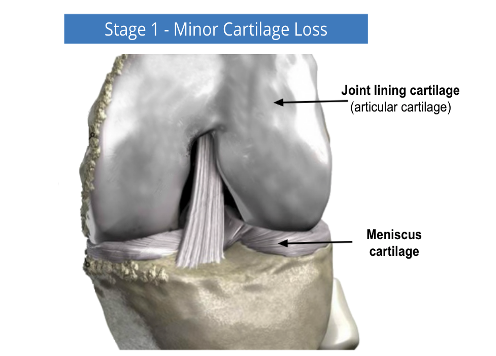
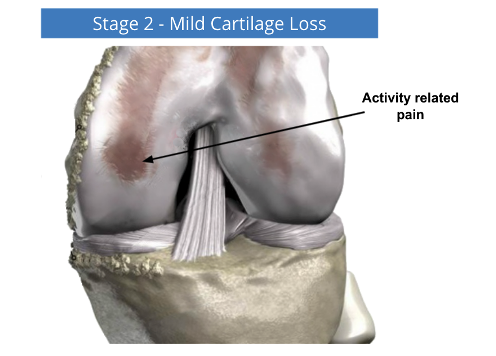
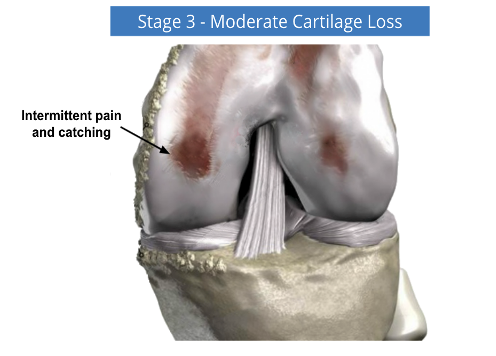
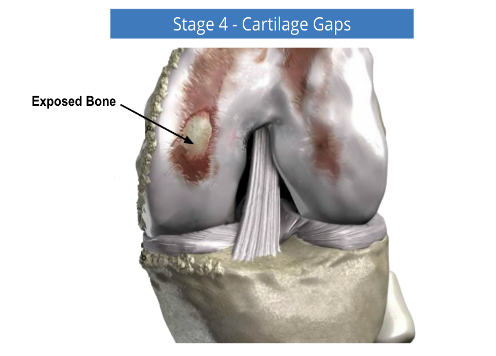
The cartilage is a padding that absorbs stress.
The proportion of cartilage damage and synovial inflammation varies with the type and stage of arthritis. Typically, early pain is due to inflammation.
In the later stages, when the cartilage is worn away, most of the pain comes from the mechanical friction of raw bones rubbing on each other.
Diagnosis of Knee Arthritis
An orthopaedic surgeon can diagnose knee arthritis through physical examination and review of the patient's medical history. They may also recommend imaging tests, such as X-rays, magnetic resonance imaging (MRI), or computed tomography (CT) scans, to evaluate the extent of cartilage damage in the knee joint.
What Can You Do?
Consult your doctor, who will determine the type of arthritis you have.
- Rest the joint until the pain subsides to prevent further inflammation
- To ease the pain or stiffness of the joint, apply heat to the joint for about 15 minutes once or twice a day using a hot water bottle, towel or an infrared lamp
- Take painkillers or anti-inflammatories, as recommended by your doctor
- If you are overweight, try to reduce weight to lighten the load on weight-bearing joints
- Participate in regular exercise
What Your Doctor Can Do For You?
There is no cure for arthritis, so beware of 'miracle cures'. Your doctor may prescribe anti-inflammatory medicine. They may recommend occupational therapy or physiotherapy, which includes exercises and heat treatment.
Surgery may be suggested in severe cases, such as a knee replacement. The type of surgery will depend on your age and the severity of the disease. In elderly patients with severe arthritis, joint replacement can yield good results.
Treatment Options for Knee Arthritis
Initial treatment for knee osteoarthritis is conservative, consisting of rest, avoiding vigorous weight-bearing activities, and using non-narcotic analgesics and anti-inflammatory medications. With worsening symptoms, a cane or a knee brace may be helpful.
An injection of cortisone into the joint is frequently advised for more severe symptoms and can be beneficial.
Treatment of osteoarthritis focuses on decreasing pain and improving joint movement. It may include:
- Exercises to keep joints flexible and improve muscle strength
- Many different medications are used to control pain, including corticosteroids and NSAIDs
- Glucocorticoids injected into joints that are inflamed and not responsive to NSAIDS
- For mild pain without inflammation, acetaminophen may be used
- Heat/cold therapy for temporary pain relief
- Joint protection to prevent strain or stress on painful joints
- Weight control to prevent extra stress on weight-bearing joints
- Surgery (sometimes) to relieve chronic pain in damaged joints
Surgery for Knee Arthritis
When conservative measures have been exhausted, offer no relief and have become disabling, surgery may be recommended. Different surgical procedures can be used and may include:
Synovectomy
This surgery is usually indicated for early cases of inflammatory arthritis with significant swelling (synovitis) that causes pain or limits the range of motion.
Synovectomy is the surgical removal of the inflamed synovium (tissue lining the joint). The procedure may be performed using arthroscopy.
Arthroplasty
In this procedure, your surgeon removes the affected joint and replaces it with an artificial implant. It is usually performed when the joint is severely damaged by osteoarthritis, rheumatoid arthritis, post-traumatic arthritis or avascular necrosis.
The goal of the surgery is to relieve pain and restore normal joint function. Total joint replacement can be performed through an open or minimally invasive approach.
Arthrodesis
A fusion, also called an arthrodesis, involves the removal of the joints and fusing the bones of the joint using metal wires or screws. This surgery is usually indicated when the joints are severely damaged, there is limited mobility, damage to the surrounding ligaments and tendons, a failed previous arthroplasty, or heavy manual use is expected.
Your surgeon will discuss these options and help you decide which type of surgery is the most appropriate for you.
Does Exercise Help Those Who Have Knee Arthritis?
Exercise is essential because it increases joint lubrication and strengthens the surrounding muscles, reducing stress on the joints.
Exercise in heated swimming pools (hydrotherapy) can greatly relieve pain and stiffness.
Also, studies have shown that exercise helps people with arthritis by reducing joint pain and stiffness and increasing flexibility, muscle strength and energy. It also helps with weight reduction and improves well-being.
What if Knee Arthritis is Untreated?
Untreated knee arthritis can lead to several complications, including
- Chronic pain and stiffness in the knee joint,
- Limited mobility and difficulty performing daily activities,
- Bone spurs and deformities in the knee joint,
- Increased risk of falls and fractures, and
- Depression and decreased quality of life