
Cubital Tunnel Syndrome
What is Cubital Tunnel Syndrome?
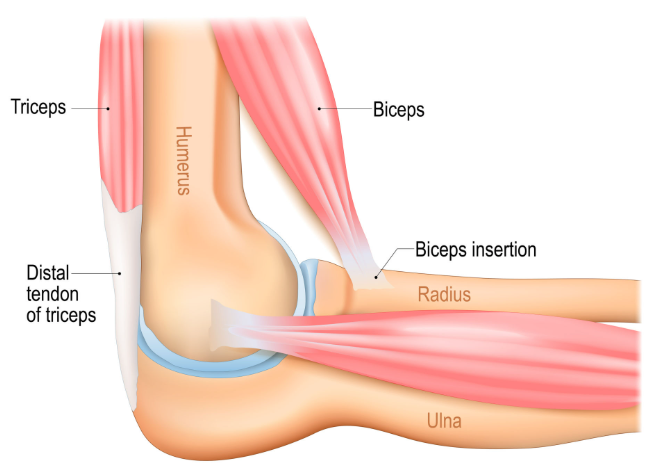
Cubital Tunnel Syndrome is a condition in which pressure or stretching of the ulnar nerve can cause numbness or tingling in the ring and small fingers, pain in the forearm, and/or weakness in the hand. This ulnar nerve travels in a groove on the inner side of the elbow (the "funny bone"). When this nerve is compressed or entrapped, it can lead to cubital tunnel syndrome.

How Does Cubital Tunnel Syndrome Impact Your Anatomy and Health?
The ulnar nerve provides sensation to the half of the ring finger closest to the little finger and the entire little finger, as well as motor innervation to some of the smaller muscles in the hand that aid in fine movements. When this nerve is compromised, it can cause pain, numbness, and tingling in the elbow, forearm, hand, and/or fingers. If left untreated, severe or chronic compression can lead to muscle weakness or wasting in the hand.

Risk Factors for Cubital Tunnel Syndrome
Risk factors for cubital tunnel syndrome include:
- Repetitive Motion: People whose jobs require repeated arm or elbow movements are more likely to develop this condition.
- Prolonged Elbow Flexion: Keeping your elbow bent for long periods, such as while sleeping or talking on the phone, can increase pressure on the ulnar nerve.
- Previous Injury: People with a prior elbow injury may develop this syndrome due to the formation of scar tissue that can compress the ulnar nerve.
- Anatomical Abnormalities: Some people have an extra muscle or band of tissue that can compress the nerve.
- Cubitus Valgus: A condition in which the elbow joint deviates from the normal alignment, potentially causing nerve compression.
- Obesity: Being overweight might increase the risk of nerve compression disorders.
- Age: Older adults may be more susceptible to nerve compression disorders due to age-related nerve degeneration and other health conditions.
- Certain Medical Conditions: Diabetes, rheumatoid arthritis, and hypothyroidism can increase the risk.
Causes of Cubital Tunnel Syndrome
Cubital Tunnel Syndrome is often caused by increased pressure on the ulnar nerve at the elbow. The nerve is especially vulnerable to pressure at the elbow because it must travel through a narrow space with very little soft tissue to protect it. Here are some common causes:
- Keeping the elbow bent or leaning on it puts pressure on the nerve.
- Keeping the elbow bent for long periods can stretch the nerve behind the elbow.
- Some people have an extra muscle or band of connective tissue that can compress the nerve.
- A direct blow to the inside of the elbow can injure the nerve.
- Bone Spurs or Arthritis
Symptoms of Cubital Tunnel Syndrome
The symptoms of cubital tunnel syndrome usually occur gradually, progressing over time, and are often felt in the hand and forearm. Common symptoms can include:
- Numbness and Tingling: This often occurs in the ring and little fingers. The symptoms are usually felt when the elbows are bent—for example, while driving or holding the phone. Some people wake up at night because their fingers are numb.
- Weakness: Decreased finger strength can make it hard to pinch or manipulate objects.
- Pain: Pain can occur on the inner side of the elbow.
- Motor Function: In severe or chronic cases, there can be a loss of coordination and clumsiness in the fingers. If the condition progresses without treatment, muscle wasting in the hand can occur.
- Sensitivity to Cold: The hand may become increasingly sensitive to cold temperatures, or the cold may bring on symptoms.
Diagnosis of Cubital Tunnel Syndrome
Diagnosis of cubital tunnel syndrome is typically based on a combination of your symptoms, medical history and physical examination. Occasionally, diagnostic tests are ordered.
During the physical exam, your doctor may:
- Check for numbness or tingling in your fingers.
- Look for muscle weakness or atrophy in your hand.
- Test the feeling in your fingers.
- Examine your elbow for inflammation, bone deformities, or previous injuries.
- Perform a Tinel's sign test, where they tap the nerve at the elbow to see if it causes finger tingling.
- Perform an elbow flexion test, where they will ask you to flex your elbow with your fingers extended for several minutes to see if it causes symptoms.
Diagnostic tests may include:
- Nerve conduction studies (NCS) and electromyography (EMG): These tests measure electrical activity in nerves and muscles and can identify whether the ulnar nerve is compressed and the severity of the compression.
- X-rays or imaging studies: These may be performed to rule out other conditions that could be causing your symptoms, such as arthritis or fractures.
Treatment Options for Cubital Tunnel Syndrome
Your doctor will recommend conservative treatment options initially unless muscle wasting or nerve damage is present.
Conservative Treatment Options
Treatment usually begins with conservative (non-surgical) approaches, which may include:
- Avoid frequent bending of the elbow.
- Avoid pressure on the elbow by not leaning on it. Elbow pads may be worn to decrease pressure when working at a desk.
- Wear a brace or splint at night while sleeping to keep the elbow straight. You can also wrap the arm loosely with a towel and secure it with tape.
- Avoid activities that tend to bring on the symptoms.
- NSAIDs (non-steroidal anti-inflammatory drugs) such as ibuprofen or aspirin may be ordered to reduce swelling.
- Referral to OT (occupational therapy) for instruction in strengthening and stretching exercises may be recommended.
Surgery for Cubital Tunnel Syndrome
If conservative treatment options fail to resolve the condition or if muscle wasting or severe nerve compression is present, your surgeon may recommend a surgical procedure to treat your condition.
The goal of cubital tunnel surgery is to reduce the pressure on the ulnar nerve by providing more space for the nerve to move freely and to increase blood flow to promote healing of the ulnar nerve. Different surgeries can be performed to treat your condition, such as:
- Ulnar nerve transposition: This surgery involves creating a new tunnel in front of the medial epicondyle and transposing (moving) the ulnar nerve to the new tunnel.
- Medial epicondylectomy removes the medial epicondyle, the bony bump on the inside of the elbow, enabling the ulnar nerve to glide smoothly when the elbow is flexed and straightened.
Your surgeon will decide which options are best for you, depending on your circumstances.
What if Cubital Tunnel Syndrome is Untreated?
If left untreated, cubital tunnel syndrome can potentially cause permanent damage to the ulnar nerve. This can lead to chronic numbness, tingling, and pain in the ring and little fingers, as well as muscle weakness or atrophy in the hand. Severe or prolonged nerve compression can lead to loss of function and coordination in the fingers and hand. If you're experiencing cubital tunnel syndrome symptoms, seeking medical attention to prevent potential long-term complications is important.